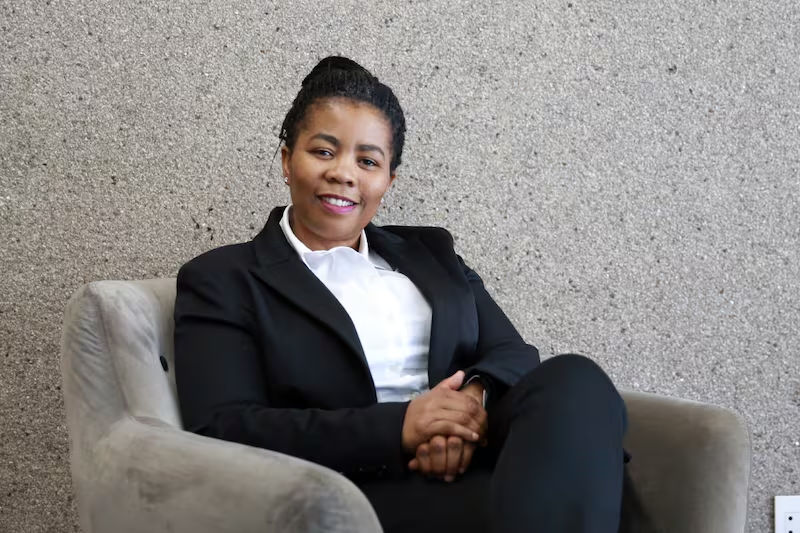
The South African Revenue Service (Sars) experienced significant organisational disruption, declining public confidence, and weakening operational effectiveness during the period of state capture. This challenging era saw the erosion of trust in key public institutions, impacting their ability to deliver on their mandates. Concurrently, Professor Puleng LenkaBula assumed office as vice-chancellor and principal of Unisa at a time when the institution was confronting significant governance, administrative, and operational challenges. These two instances exemplify institutions facing profound difficulties, yet their subsequent trajectories highlight concerted efforts towards rebuilding and stability, demonstrating a remarkable capacity for resilience within South Africa's institutional landscape.
Sars: Rebuilding Trust and Capacity
The South African Revenue Service (Sars) has worked diligently to restore its credibility and operational capacity following a period of institutional disruption that severely impacted its ability to collect revenue and enforce tax compliance. The organization implemented decisive leadership changes, critical governance reforms, and a renewed commitment to institutional integrity. These measures were central to rebuilding public confidence and strengthening its operational effectiveness, which had been severely compromised during the state capture era. The efforts aimed to reverse the decline in performance experienced during the state capture era, focusing on re-establishing the tax agency's core functions and ethical standards. Sars's rebuilding strategy involved enhancing its internal controls, improving its data analytics capabilities, and fostering a culture of accountability among its staff. This full approach was key in re-establishing Sars as a credible and effective revenue collection agency, essential for the nation's economic stability. The successful implementation of these reforms has allowed Sars to regain its footing and reinforce its vital role in the country's fiscal framework.
Unisa's Path to Renewal
The University of South Africa (Unisa) stands as Africa's largest university and one of the continent's most significant institutions of higher learning, serving a vast and diverse student body across South Africa and beyond. Unisa has introduced innovative offerings as part of its renewal efforts, designed to keep pace with global educational trends and industry demands. These new programs include aviation-related qualifications, diversifying its educational portfolio and responding to evolving industry demands. The introduction of these programs shows Unisa's commitment to providing relevant and forward-looking education. The institution's strategic introductions are aimed at enhancing its relevance and reach within the higher education sector, ensuring it continues to play a key role in national development and human capital formation. This expansion of academic offerings is part of a broader strategy to modernise the university and reinforce its position as a leading distance education provider.
Lessons in Institutional Recovery
Unisa has undertaken extensive efforts aimed at institutional stabilisation, governance improvement, and academic renewal. The institution's research output has improved significantly, reflecting a renewed focus on academic excellence and scholarly contribution. It has gained increasing recognition within national and international ranking systems, suggesting it is strengthening its position among global universities. This enhanced standing is a testament to the dedication of its leadership and staff in navigating a complex environment. John Ntshaupe Molepo, executive director of the South African Association of Public Administration and Management (Saapam) and associate professor at Tshwane University of Technology, observes that leaders entering challenging environments often face intense scrutiny. Molepo stated, "Like many leaders who assume office during periods of organisational difficulty, Professor LenkaBula faced criticism from various stakeholders, some of whom questioned her leadership capabilities and suitability for the role. Such criticism is not uncommon in public institutions, where newly appointed leaders often inherit longstanding challenges but are nevertheless expected to provide immediate solutions." This perspective notes the inherent difficulties in leading institutions through periods of significant reform and the resilience required to navigate such pressures. The journeys of both Sars and Unisa offer valuable insights into the complexities and triumphs of institutional recovery in South Africa.