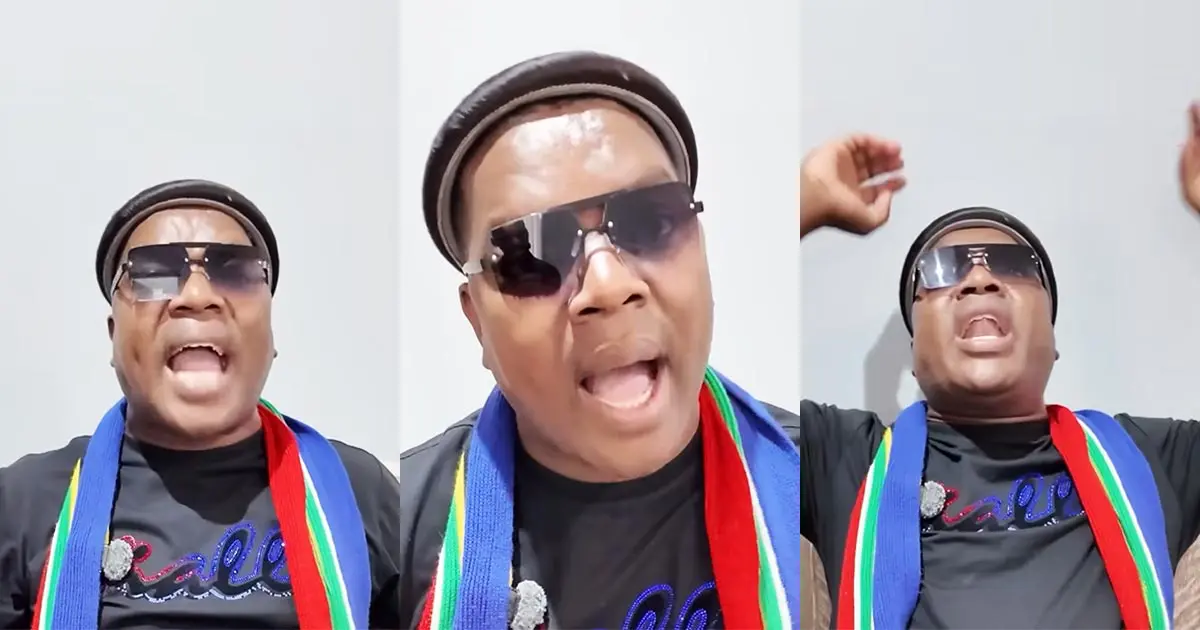
The Johannesburg High Court, acting as the Equality Court, found Ngizwe Mchunu guilty of hate speech, harassment, and unfair discrimination against LGBTQ+ people. This landmark ruling by the Johannesburg High Court, sitting as the Equality Court, specifically addressed Mchunu's conduct. The ruling stemmed from statements and queerphobic slurs Mchunu made in social media videos during September and October 2025. The matter centered on these specific statements and slurs, which were disseminated across various online platforms. The court determined that Mchunu's actions "constituted harassment and unfair discrimination against gay and lesbian people, in contravention of sections 11 and 6 of the Act."
The court granted all relief sought by the complainants. This included a permanent prohibition against Mchunu publishing further discriminatory online content, a requirement for him to issue a public apology, payment of legal costs, and mandatory human rights sensitisation training. The full nature of the relief aimed to address both the immediate harm caused and to prevent future discriminatory acts.
Court's Findings and Penalties
The court determined that Ngizwe Mchunu’s statements were "quite obviously, hate speech, harassment and unfair discrimination under sections 10, 11 and 6 of the Promotion of Equality and Prevention of Unfair Discrimination Act 4 of 2000," according to Judge Wright. This finding noted the clear breach of legal provisions designed to protect individuals from discrimination. Judge Wright further found that Mchunu "acted against the Constitution and he has insulted and threatened persons who enjoy Constitutional rights." The judge showed the importance of constitutional protections for all individuals, regardless of their sexual orientation or gender identity. The court concluded that Mchunu’s actions "constituted harassment and unfair discrimination against gay and lesbian people, in contravention of sections 11 and 6 of the Act." This legal determination reinforced the gravity of Mchunu's conduct under South African law.
As part of its ruling, the court issued a permanent prohibition against Mchunu, preventing him from publishing any further material on any online platform that directly or indirectly discriminates against LGBTQIA+ people or communities. This permanent prohibition is a key measure to curb the spread of hate speech. Mchunu is also mandated to publish an unconditional apology to LGBTQ+ people on his Facebook page within five days of the judgment. This apology must be pinned as the top post on his page for a minimum of three months. The requirement for a public, pinned apology ensures broad visibility and acknowledges the harm caused.
The court ordered Mchunu to cover the legal costs incurred by the complainants in the case. This financial obligation holds Mchunu accountable for the expenses associated with bringing the matter to court. Additionally, Mchunu has a period of 120 days to complete 20 hours of human rights sensitisation training. This training will be conducted either by the South African Human Rights Commission (SAHRC) or an institution nominated by it. The SAHRC commented on the court's approach, stating, "This approach contributes not only to accountability but also to transformation and social cohesion." The inclusion of sensitisation training shows the court's aim for restorative justice and education.
Background of Mchunu's Actions
Ngizwe Mchunu's anti-LGBTQ+ campaign commenced after images of a same-sex wedding, where the couple wore traditional attire, gained widespread circulation online. This event, which drew significant public attention, appears to have triggered Mchunu's subsequent actions. Mchunu subsequently claimed that gay and lesbian individuals were grooming children, acting against the will of God, and actively corrupting Zulu culture. These accusations were central to his public statements and formed a significant part of the complaints against him. These statements formed part of a broader series of public actions.
In one notable instance, Mchunu led a group of men, some carrying beer bottles, sjamboks, and knobkerries, to KwaMai-Mai in Johannesburg with the stated intention of confronting queer patrons. This march, characterized by its confrontational nature and the presence of weapons, was a key event cited in the legal proceedings. Mchunu's public profile has also included leading an anti-immigrant campaign and making anti-Indian statements, drawing further media attention. These additional controversies illustrate a pattern of Mchunu engaging in divisive rhetoric and actions.
His legal entanglements extend beyond the recent hate speech ruling. Mchunu was recently taken to court by EFF leader Julius Malema concerning defamatory remarks made by Mchunu. These various incidents illustrate a pattern of controversial public statements and actions by Mchunu preceding the current hate speech conviction. This history provides context for the court's findings regarding his discriminatory behavior.
Reactions and Implications
The court ordered Ngizwe Mchunu to pay R250,000 as part of its judgment. This substantial financial penalty reflects the seriousness with which the court viewed Mchunu's actions. This amount must be paid to either TransHope or the Hate Crimes Working Group (HCWG), the two primary complainants in the case. The choice of recipient ensures that the funds support organizations working to combat hate and discrimination. TransHope initially filed the case against Mchunu, with support from both the HCWG and the South African Human Rights Commission (SAHRC). The collaborative effort of these organizations was instrumental in bringing the case to a successful conclusion.
The court also specifically found that Mchunu's anti-LGBTQ+ march on October 5, 2025, to KwaMai-Mai in Johannesburg, "constituted harassment and unfair discrimination against gay and lesbian people, in contravention of sections 11 and 6 of the Act." This finding addressed one of the key actions cited in the complaint, legally affirming the discriminatory nature of the march. The march, which involved Mchunu leading a group of men carrying various objects, aimed to confront queer patrons. This specific event was noted as a clear instance of harassment and unfair discrimination under the law.
The Hate Crimes Working Group welcomed the ruling, stating it was "for every LGBTQIA+ person who has ever been told they are less deserving of dignity, respect or equal treatment under the law." The organization emphasized that the judgment sends a clear message "that constitutional rights are not optional, and that minority communities cannot be treated as targets for hatred and division." The HCWG further commented on the broader implications of the decision, noting that "Hate speech fuels prejudice. Prejudice fuels discrimination. Discrimination fuels violence." This statement shows the dangerous progression that can result from unchecked hate speech. The organization concluded, "In a country where LGBTQIA+ people continue to face harassment, exclusion and hate crimes, words have consequences. This judgment decisively affirms that reality!" This strong affirmation from the HCWG notes the significance of the ruling in upholding human rights and promoting social cohesion in South Africa.