Money Desk
Petrol could rise nearly R5/l in November
Early Central Energy Fund projections indicate that petrol prices in South Africa could increase by nearly R5 per litre in November 2026.
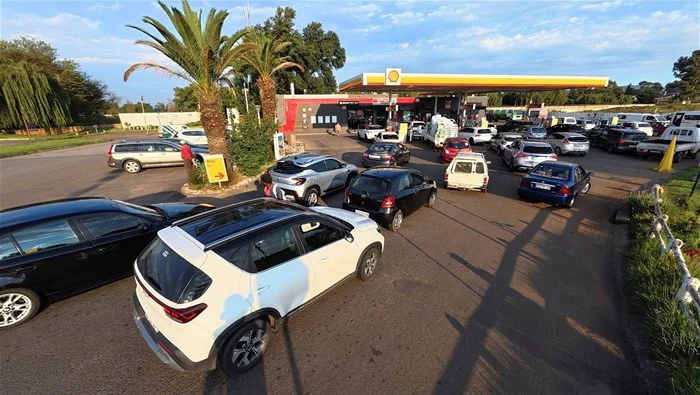
Petrol prices in South Africa could rise by nearly R5 per litre in November 2026, according to early Central Energy Fund (CEF) projections. The figure is an early estimate, not a confirmed adjustment.
Government Fuel Support Measure
Parliament’s Select Committee on Appropriations has adopted the Special Appropriation Bill, a measure intended to help stabilise fuel prices.
Under the bill, the National Treasury is authorised to withdraw R10bn from the National Revenue Fund for the Department of Mineral and Petroleum Resources. The money is meant to help cover fuel costs and protect consumers from price volatility arising from the conflict between the US, Israel and Iran.
Taxes and Oil Prices
South African motorists pay approximately R7 to R8 in taxes within the fuel price, according to calculations by the Automobile Association of South Africa (AA). AA chief executive Bobby Ramagwede, quoted by SABC News, said these taxes are unrelated to the fuel commodity and that the government could afford to set them aside until the conflict has left the global oil price more stable.
Oil prices are also adding pressure. Brent crude remains above $100 a barrel because of the conflict in West Asia, Reuters reports.
| Measure | Period | Price |
|---|---|---|
| Taxes included in the fuel price, according to the AA | Current calculation | Approximately R7 to R8 |
| Brent crude price | Current | Above $100 a barrel |
| Goldman Sachs Brent forecast | December 2026 | $90 a barrel |
| Previous Goldman Sachs Brent forecast | December 2026 | $85 a barrel |
| Goldman Sachs WTI forecast | December 2026 | $81 |
| Goldman Sachs WTI forecast | 2027 | $73 |
Goldman Sachs raised its Brent crude forecast for December 2026 to $90 a barrel from $85, analysts led by Daan Struyven said in a note. That is still below the current price of more than $100. The analysts said their base case is that “continued adaptation of supply will eventually reduce crude oil prices”, while “potential renewed escalation still poses significant net upside risk”.
For West Texas Intermediate (WTI) crude, Goldman Sachs forecast an average price of $81 in December 2026 and $73 in 2027.