President Cyril Ramaphosa announced a raft of measures aimed at tackling illegal immigration on Sunday, signaling a significant shift in South Africa's approach to cross-border movement. The announcement from Pretoria comes as South Africa has for years positioned itself as one of the strongest advocates of African integration. The nation has championed freer trade and the African Continental Free Trade Area (AfCFTA), a stance that now faces scrutiny following the new immigration crackdown. This development follows a period of heightened public debate within South Africa regarding the status of undocumented migrants. The measures are expected to impact individuals from various African nations residing in South Africa, reflecting a nationwide push to regulate the presence of foreign nationals more stringently.
Envoys Dispatched Amidst Strained Ties
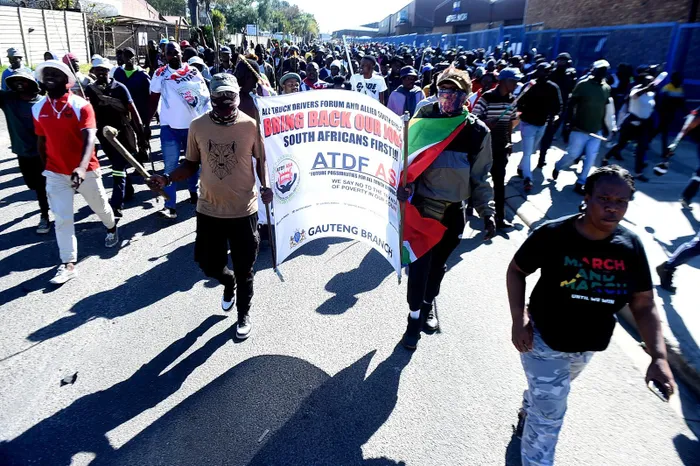
South Africa's newly announced immigration measures include the establishment of specialized immigration courts, intensified deportation processes, the implementation of labor migration quotas, and stricter border controls. These policies are part of a broader crackdown on undocumented migration. The establishment of specialized immigration courts is intended to streamline the legal processes for dealing with immigration offenses, while intensified deportation processes aim to expedite the removal of individuals found to be in the country unlawfully. The introduction of labor migration quotas will cap the number of foreign workers allowed into specific sectors, and tighter border controls are designed to prevent irregular entry. This full approach shows the government's commitment to reinforcing its immigration framework. The tightening of immigration policies has coincided with increased tensions, as seen in May, when nearly 300 Ghanaian nationals returned to Ghana from South Africa. Their return occurred amidst growing concerns over migration issues and a backdrop of anti-foreigner protests within South Africa, noting the immediate human impact of these evolving policies and the underlying social pressures. These protests have often targeted foreign-owned businesses and communities, creating an atmosphere of fear and uncertainty among migrant populations.
Business Unity South Africa and Business Leadership South Africa, two prominent business organizations, have voiced concerns regarding the potential economic and diplomatic fallout. The organizations warned that an environment of hostility towards foreign nationals could severely damage cross-border trade relations. They also stated that such sentiments risk undermining South Africa’s relationships with other nations across the African continent, potentially jeopardizing long-standing economic partnerships and future investment opportunities. The business community fears that a perception of South Africa as unwelcoming to foreign nationals could deter skilled labor and investment, critical for economic growth.
African Integration Legacy Tested
International Relations and Cooperation Minister Ronald Lamola acknowledged that recent anti-foreigner tensions have strained relations with other African nations. "South Africa itself is a product of the solidarity of the African continent," Lamola stated, emphasizing the historical context of regional support. He added that the South African government feels "duty bound to explain to our African sister countries" the rationale behind the new immigration measures. Lamola further clarified that authorities are focused on addressing the issue factually, cautioning against misinformation. "The only issue we are clarifying is that as we deal with the matter, let’s deal with it factually, not misinformation," he said, indicating a proactive stance to manage the narrative surrounding the crackdown. This effort to clarify the government's position is key in mitigating diplomatic friction and ensuring that the measures are understood within the broader context of national sovereignty and law enforcement.
Minister Lamola also affirmed the government's stance against xenophobic acts. "There should be no such attacks against any foreign national," Lamola said, stressing that protecting all individuals within South Africa is the government's responsibility, not that of private citizens. He showed that the government is committed to upholding the rule of law and ensuring the safety of all residents, regardless of their nationality. Ghanaian authorities have indicated they are documenting losses suffered by Ghanaian-owned businesses and individuals in South Africa, a move that could lead to formal diplomatic representations or claims for compensation. This documentation effort notes the severity of the impact on foreign nationals and the potential for these incidents to escalate into broader diplomatic disputes.
South African banks, retailers, telecommunications companies, insurers, and industrial groups have spent decades establishing operations across the continent, contributing significantly to regional economic integration. This intricate network of cross-border business relationships shows the potential impact of diplomatic tensions, as these companies rely on stable political environments and good bilateral relations to operate effectively. Disruptions to these relationships could have broad economic consequences for South Africa and its regional partners. In a move aimed at fostering regional ties, South Africa officially lifted visa requirements for Kenyans travelling with ordinary passports in 2023, a policy that contrasts with the current tightening of immigration controls and notes the complex dual objectives of promoting regional integration while addressing domestic immigration concerns.
Addressing Misinformation and Future Steps
South Africa is dispatching envoys across the continent to explain its migration crackdown, aiming to address concerns and clarify its position. International Relations and Cooperation Minister Ronald Lamola stated that authorities are focused on addressing the issue factually, cautioning against misinformation. "The only issue we are clarifying is that as we deal with the matter, let’s deal with it factually, not misinformation," Lamola said. He further clarified that 74% of the Ghanaians who returned to Ghana had overstayed their visas and had been declared undesirable under South African immigration laws, providing a specific data point to justify the government's actions regarding deportations. This statistic is presented as evidence that the deportations are based on legal immigration status rather than arbitrary targeting.
Lamola also affirmed the government's stance against xenophobic acts, stating, "There should be no such attacks against any foreign national." He emphasized that protecting all individuals within South Africa is the government's responsibility, not that of private citizens, adding, "It is the responsibility of government and not private individuals." The minister noted South Africa's historical ties with the continent, noting that the country's democratic transition was supported by governments, liberation movements, and citizens across Africa. "South Africa itself is a product of the solidarity of the African continent," Lamola stated, showing the importance of regional relationships and the nation's gratitude for the continental support received during its struggle against apartheid. This historical context serves as a reminder of the deep-seated connections South Africa shares with its neighbors, making the current tensions particularly sensitive. The diplomatic efforts are therefore geared towards balancing national interests with the preservation of these key regional bonds.